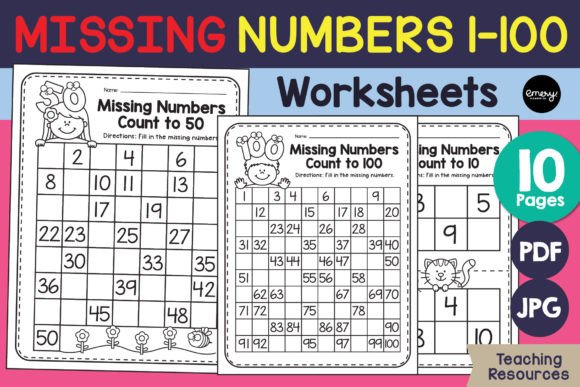
Fill in the Missing Number Worksheets: A Design Asset for Foundational Learning
In the world of educational design, the most effective resources often combine clean aesthetics with fundamental pedagogical goals. Fill in the Missing Number Worksheets represent a perfect intersection of graphic design utility and essential learning, offering a structured visual framework for young learners to master numerical sequences from 1 to 100. This collection provides a ready-to-use template for educators and parents seeking a professional, print-ready solution that prioritizes clarity and focus.
The Role of Visual Hierarchy in Educational Materials
Effective educational print design relies heavily on a clear visual hierarchy to guide the user's eye and minimize cognitive load. These worksheets are meticulously crafted with a black and white color palette, ensuring the focus remains squarely on the numerical patterns. The high-resolution 300 dpi dimensions (8.5x11 inches) guarantee sharp text and clean lines, whether displayed on a screen or printed. This approach mirrors core principles in graphic design and editorial design, where content structure and readability are paramount. The absence of color ink requirements also makes these sheets a practical, cost-effective asset for any design workflow in a classroom or home setting.
Practical Applications Beyond the Classroom
While designed for kindergartners and first graders, the structured simplicity of these Fill in the Missing Number Worksheets offers surprising versatility for creative professionals. Consider how their clean layout and sequential logic can be adapted:
- Branding and Visual Systems: Use the worksheets as a metaphor for building a brand's numerical identity, such as in a style guide explaining a brand's core values or a timeline.
- Marketing Materials: The concept of "filling in the missing pieces" can translate into compelling campaign visuals for puzzle-based promotions or interactive social media graphics.
- Packaging and Editorial Design: The worksheets' linear flow can inspire layouts for product packaging with sequential instructions or editorial spreads that guide readers through a story.
- Digital Product Design: The activity's interactive nature is a direct parallel to UI/UX design, where users complete tasks, making it an excellent case study for designing intuitive user journeys.
Evaluating and Implementing Design Assets
When integrating any asset, from a font to a worksheet template, a designer must consider consistency and scalability. This product includes both PDF and JPEG files, offering flexibility for various digital marketing and print design applications. The single JPG files allow for easy integration into larger digital compositions or presentations, while the consolidated PDF ensures a cohesive print experience. Always assess how an asset's inherent typography and composition align with your project's existing brand identity or visual style. The neutral, professional presentation of these worksheets makes them a compatible component within a broader creative toolkit.
Ultimately, the power of a well-designed resource lies in its ability to communicate a concept with immediate clarity and purpose. By leveraging thoughtfully created assets like these, designers and educators alike can build more engaging, effective, and visually harmonious experiences that teach, inform, and inspire. The right creative tools don't just look good—they make the work of learning and communication fundamentally better.